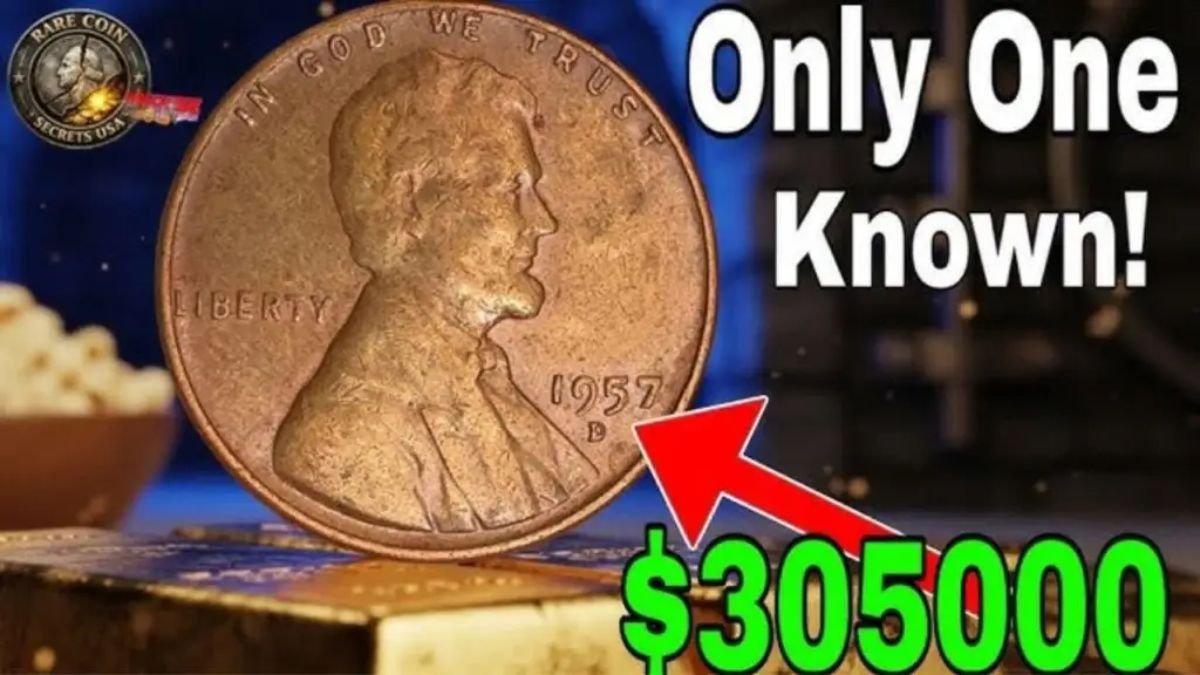
Finding an old Lincoln Wheat Penny in a drawer, collection, coin jar, or even loose change can be surprisingly exciting. These pennies were produced in the United States from 1909 through 1958, and some examples are worth considerably more than their one-cent face value.
However, not every Wheat Penny is rare or valuable. The date, mintmark, condition and possible errors or varieties can make a major difference in its collectible value.
If you’ve found one, don’t spend it before checking a few important details.
What Is a Wheat Penny?
The Lincoln Wheat Penny is an American one-cent coin featuring Abraham Lincoln on the front and two wheat ears on the reverse.
The design was introduced in 1909 to commemorate the 100th anniversary of Lincoln’s birth. The Wheat reverse remained in use until 1958, after which it was replaced by the Lincoln Memorial design.
Because the series was produced for nearly five decades, millions of Wheat Pennies still exist. Most common dates have modest values, but certain dates, mintmarks and varieties are highly sought after by collectors.
First, Check the Date
The first thing to do when you find a Wheat Penny is look at the year.
Some dates are much more important to collectors than others. The major key dates include:
- 1909-S VDB
- 1914-D
- 1931-S
The 1909-S VDB is particularly famous because it was one of the first Lincoln cents and carries the designer’s initials, V.D.B., on the reverse. Fewer than half a million were struck with those initials at the San Francisco Mint.
The 1914-D is another major rarity, with a mintage of approximately 1.19 million coins. The 1931-S is also a key date, with only 866,000 pieces produced.
Look for the Mintmark
After checking the date, look for a small mintmark.
Depending on the year, you may find:
- D — Denver Mint
- S — San Francisco Mint
- No mintmark — Philadelphia Mint
The mintmark can make a significant difference in value.
For example, a 1914-D Wheat Penny is much more desirable than a common Philadelphia issue from the same period. Similarly, the 1909-S coins are important to collectors, particularly the 1909-S VDB.
Is It a 1909-S VDB?
If your Wheat Penny is dated 1909, take a particularly close look.
Some 1909 cents produced at the San Francisco Mint have the letters V.D.B. on the reverse near the bottom.
These initials represent Victor David Brenner, the designer of the Lincoln cent.
The initials were removed from the design following public criticism, making the 1909-S VDB one of the most famous key coins in the Lincoln cent series.
If you think you have a 1909-S VDB, avoid cleaning it and consider having it examined by a reputable coin dealer or professional grading service.
Check for the 1914-D
A 1914-D Lincoln Wheat Penny is another date that deserves immediate attention.
Only about 1.19 million were struck at the Denver Mint, and many entered circulation rather than being carefully preserved. As a result, high-grade examples can be particularly valuable.
If your coin clearly shows 1914-D, don’t assume its value based solely on online asking prices. Condition, authenticity and whether the coin has been altered all matter.
Don’t Forget the 1931-S
The 1931-S is another major key date.
Only 866,000 were produced, making it one of the lowest-mintage regular Lincoln Wheat cents. Collectors recognized its scarcity early, and many examples were saved in better condition than other coins from the period.
A genuine 1931-S is therefore worth closer inspection, especially if it has strong details and limited wear.
What About the 1922 “No D” Penny?
Another famous Wheat Penny variety is the 1922 No D.
The interesting detail is that Philadelphia did not produce Lincoln cents in 1922. Therefore, the 1922 cents were Denver issues, meaning they were expected to carry a D mintmark.
On certain coins, however, the D is missing or nearly invisible because of a striking-related problem. These pieces are known as 1922 “Plain” or 1922 No D cents and are highly sought after.
Be careful, though: a weak or worn mintmark does not automatically make a coin a valuable No D variety. Authentication is important.
Look for Valuable Errors
Some Wheat Pennies can be valuable because of mint errors or die varieties.
Collectors look for features such as:
- Doubled dates
- Doubled lettering
- Repunched mintmarks
- Missing design elements
- Unusual planchets
- Major striking errors
The 1955 doubled-die Lincoln cent, for example, is one of the best-known varieties in the series. NGC also identifies several other significant doubled-die Lincoln cents, including examples from 1917, 1936, 1958 and 1972.
A suspected error should be carefully examined because damage that occurred after the coin left the mint can sometimes look like an error.
Condition Can Change the Value
Two Wheat Pennies with the same date and mintmark can have very different values.
Collectors generally pay more for coins with:
- Sharp details
- Minimal wear
- Original surfaces
- Attractive color
- Little corrosion or damage
- Strong mint luster on uncirculated examples
For copper Lincoln cents, collectors may also encounter the designations Brown (BN), Red-Brown (RB), and Red (RD). These describe the amount of original red coloration remaining on the coin and can significantly affect collector value.
Don’t Clean Your Wheat Penny
One of the biggest mistakes new collectors make is cleaning an old coin.
You may think polishing the surface will make the penny look better, but cleaning can permanently damage the coin’s original surface and reduce its desirability to collectors.
If you’ve found an old or potentially rare Wheat Penny, leave it in its current condition until you’ve had it evaluated.
How Much Is a Wheat Penny Worth?
There is no single price for all Wheat Pennies.
A common circulated Wheat Penny may have only a small premium over its face value, while scarce dates, varieties and high-grade examples can be worth substantially more.
For example, professional price guides show that even within a single year such as 1943, values can vary dramatically according to condition and mintmark. NGC lists ordinary circulated 1943 cents at relatively modest values, while exceptional uncirculated examples can bring much higher prices.
Rare varieties are a completely different category. The 1944 steel cent, for instance, is an extremely unusual error associated with leftover steel planchets from the 1943 steel-cent production, and NGC’s July 2026 guide places examples at very high values.
This is why a coin should be identified by its exact date, mintmark, variety and condition before assigning a value.
Wheat Penny Dates Worth Checking
Here are some dates and varieties that deserve extra attention:
| Wheat Penny | Why Collectors Watch It |
|---|---|
| 1909-S VDB | Major key date |
| 1909-S | Scarce early issue |
| 1914-D | Major key date |
| 1922 No D | Famous scarce variety |
| 1931-S | Low-mintage key date |
| 1955 Doubled Die | Major error/variety |
| 1943 Bronze | Extremely rare error |
| 1944 Steel | Extremely rare error |
This isn’t a complete list of valuable Wheat Pennies. Many additional varieties, mint errors and condition rarities exist.
What Should You Do If You Find One?
If you’ve just discovered a Wheat Penny, follow these simple steps:
1. Don’t clean it.
Keep the coin in its original condition.
2. Record the date.
This is the first major clue.
3. Check the mintmark.
Look beneath the date for a D, S or no mintmark.
4. Examine both sides.
Look for unusual doubling, missing details or other abnormalities.
5. Compare it with reliable references.
Professional organizations such as PCGS and NGC provide information about Lincoln cent varieties and values.
6. Get valuable-looking coins authenticated.
If the coin appears to be a major rarity, professional authentication can be worthwhile.
Could Your Wheat Penny Really Be Worth Thousands?
Yes, but it depends entirely on what you have.
A headline claiming that every Wheat Penny is worth thousands of dollars is misleading. Most surviving examples are not rare. The potentially valuable coins are generally associated with scarce dates, mintmarks, recognized varieties, major errors or exceptional condition.
The best approach is therefore to identify the coin first and determine its market value second.
Final Thoughts
Finding a Wheat Penny is always worth a closer look. These historic Lincoln cents are popular among collectors, and a small number of dates and varieties can be considerably more valuable than their one-cent face value.
The 1909-S VDB, 1914-D and 1931-S are among the most important dates to watch, while varieties such as the 1922 No D and major doubled dies can also attract strong collector interest.
So, if you find an old Wheat Penny, don’t throw it back into your change jar just yet. Check the date, mintmark, condition and possible varieties first—you might have something worth investigating.