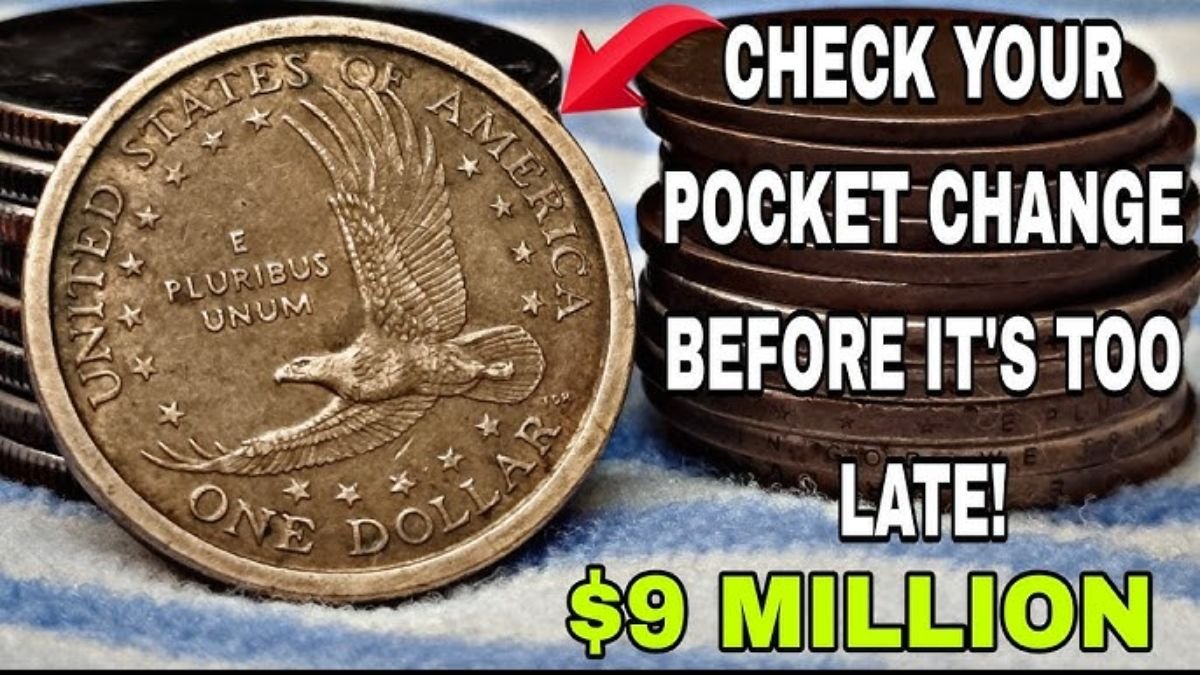
A Sacagawea dollar may look like an ordinary $1 coin, but some unusual examples can be worth far more than face value. The 2000-P Sacagawea dollar, in particular, has several famous varieties that collectors actively search for.
The 2001-D Sacagawea dollar is a different story. While ordinary examples are common, exceptionally high-grade coins can bring premiums. That means you shouldn’t assume every 2001-D is worth thousands—but it can still be worth checking.
Here are two 2000-P and 2001-D Sacagawea dollars that deserve a closer look.
1. 2000-P “Cheerios” Sacagawea Dollar
The 2000-P Cheerios dollar is one of the most famous modern U.S. coin varieties.
As part of a promotion for the new Sacagawea dollar, the U.S. Mint supplied 5,500 2000-dated dollars to General Mills for distribution in specially selected Cheerios cereal boxes. Collectors later discovered that some of these coins had a different reverse design, featuring much more detailed tail feathers on the eagle.
That enhanced reverse is the key feature collectors look for.
The rarity can translate into serious money. PCGS records an auction result of $35,250 for a 2000-P Cheerios promotion dollar graded MS66, while another PCGS-recorded example reached $34,500 in MS68.
However, don’t assume every 2000-P Sacagawea dollar is a Cheerios dollar. Most are ordinary coins.
What to check: Turn the coin over and examine the eagle’s tail feathers. The rare prototype reverse has noticeably more detailed feather definition than the regular 2000 design. Professional attribution is recommended before assuming you have the rare variety.
2. 2001-D Sacagawea Dollar in Exceptional Condition
The 2001-D Sacagawea dollar is not generally a rare coin. PCGS estimates approximately 70.5 million examples and describes the issue as very common in circulated grades through MS64.
So why should collectors check it?
The answer is condition.
PCGS reports that 2001-D coins become increasingly difficult to find in MS65 and higher grades. In MS68, the population becomes especially limited, with PCGS noting that possibly no more than about 200 examples were known and none were finer at the time of its assessment.
This means an ordinary circulated 2001-D dollar generally isn’t worth thousands. But a spectacular, professionally graded example in an elite grade can be much more interesting to collectors.
What to check: Look for a coin with bright original surfaces, minimal marks, a strong strike, and no obvious scratches or damage. If it appears exceptionally pristine, professional grading may be worth considering.
What About Other Valuable 2000 Sacagawea Dollars?
The 2000-P issue has other major varieties and errors worth knowing about.
One of the most famous is the Wounded Eagle variety, which shows a prominent die gouge or line across the eagle’s breast. There is also the extraordinary 2000-P Sacagawea/Washington quarter mule, an extremely rare error involving mismatched designs.
NGC’s auction records show a 2000-P Sacagawea reverse mule graded MS67 selling for $102,000, demonstrating how valuable a genuine major mint error can become.
These coins are exceptionally rare, however, and should not be confused with ordinary Sacagawea dollars.
Don’t Clean Your Sacagawea Dollar
If you believe you’ve found a rare Sacagawea dollar, don’t clean or polish it.
Cleaning can damage the coin’s original surfaces and potentially reduce its collector value. Instead, handle it carefully by the edges and compare it with reliable numismatic references.
For potentially valuable varieties, professional authentication from a recognized grading service is the safest way to establish what you have.
Frequently Asked Questions
Is every 2000-P Sacagawea dollar valuable?
No. More than 767 million 2000-P Sacagawea dollars were produced. The valuable examples are specific varieties, errors, and exceptional-condition coins.
How can I identify a Cheerios dollar?
Examine the eagle’s tail feathers on the reverse. The Cheerios variety has a distinctive, more detailed feather design compared with the regular 2000 reverse. Professional attribution is recommended.
Is a 2001-D Sacagawea dollar worth thousands?
Usually not. Most circulated 2001-D dollars are common and worth around face value. The potential premium comes primarily from exceptionally high-grade examples or unusual varieties.
What is the most valuable Sacagawea dollar?
Some extremely rare errors have sold for extraordinary prices. NGC lists a 2000-P Sacagawea reverse mule at $102,000, while a 2000-P Cheerios promotion dollar has reached $35,250 in a PCGS-recorded auction.
Should I spend my 2000-P or 2001-D Sacagawea dollar?
Before spending one, check the date, mint mark, reverse design, condition, and possible errors. Most are ordinary, but a genuine rare variety can be worth substantially more than $1.
So before you put that Sacagawea dollar into a vending machine or cash register, take a closer look. The right variety—or an exceptionally preserved example—could be far more interesting than its $1 face value.