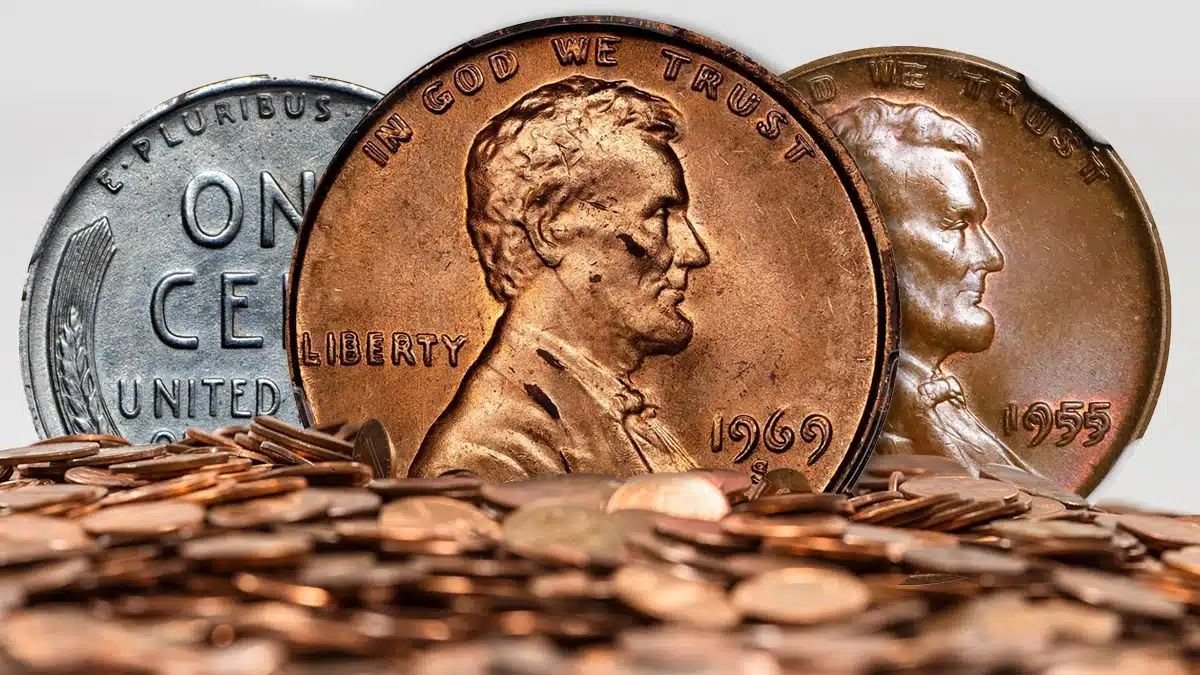
A Lincoln cent may be worth only one cent—or potentially much more if it has the right date, mint mark, error, or variety. Since the Lincoln cent was introduced in 1909, millions of different coins have been produced, but some unusual examples have become highly collectible.
From famous Wheat cents to modern doubled-die varieties, these 11 Lincoln cents are worth checking before you spend or discard them.
1. 1909-S VDB Lincoln Cent
The 1909-S VDB is one of the most famous Lincoln cents ever produced. Only 484,000 were struck at the San Francisco Mint. The coin features Victor David Brenner’s initials, VDB, on the reverse. Its low mintage and historical importance make it a major key date for collectors.
2. 1914-D Lincoln Cent
The 1914-D was struck at the Denver Mint and is another major Wheat cent rarity. Collectors particularly value examples with strong details and original surfaces. The D mint mark beneath the date is an important feature to check.
3. 1931-S Lincoln Cent
Only 866,000 1931-S Lincoln cents were produced, making this one of the lowest-mintage regular issues of the Wheat cent era. Finding the S mint mark below the date can turn an otherwise ordinary-looking old penny into a desirable collector coin.
4. 1922 No D Lincoln Cent
The 1922 No D is one of the most fascinating Lincoln cent varieties. No Philadelphia cents were struck that year, while Denver produced the year’s cents. Die polishing caused the D mint mark to disappear or become extremely weak on certain coins.
Be careful, because altered 1922-D cents with the D removed are a known problem. Professional authentication is recommended for a suspected No D.
5. 1955 Doubled Die Obverse
The 1955 Doubled Die is among the most recognizable U.S. error coins. The doubling is dramatic on the date and lettering, particularly LIBERTY and IN GOD WE TRUST. PCGS describes it as one of the most important and popular doubled-die Lincoln cents.
6. 1969-S Doubled Die
The 1969-S Doubled Die is another extremely desirable Lincoln cent variety. Collectors look for clear doubling on the obverse, especially around the date and lettering.
However, not every coin showing apparent doubling is valuable. Machine doubling can look similar, and PCGS notes that many purported 1969-S doubled dies submitted for authentication are actually machine-doubled coins.
7. 1972 Doubled Die
The 1972 Doubled Die is another variety worth checking when searching through older Lincoln cents. Strong doubling can appear on the obverse lettering and date. As with other doubled dies, proper identification is important because ordinary strike-related doubling can be mistaken for a valuable variety.
8. 1943 Bronze Cent
The 1943 Bronze Lincoln cent is one of the most famous mint errors in American coin collecting. During World War II, the Mint used zinc-coated steel planchets for cents to conserve copper. However, a small number of bronze planchets were accidentally used for 1943 cents.
Genuine examples are extremely rare and valuable, but counterfeit and altered coins exist, so authentication is essential.
9. 1944 Steel Cent
The following year produced another famous transitional error. The Mint returned to copper-based planchets in 1944, but a small number of leftover 1943 steel planchets were apparently struck with the 1944 date.
A genuine 1944 Steel cent can be worth thousands of dollars, making any suspected example worth professional examination.
10. 1992 Close AM
The 1992 Close AM is a fascinating modern Lincoln cent variety. The key feature appears on the reverse, where the letters A and M in AMERICA are unusually close together.
Because the normal 1992 design differs, collectors carefully examine these letters when searching for this variety.
11. 1995 Doubled Die
The 1995 Doubled Die is another modern Lincoln cent that can attract collector interest. The doubling is most noticeable in areas of the obverse lettering.
If you find a 1995 cent with unusual doubling, compare it carefully with recognized examples before assuming it is valuable.
How Much Are Rare Lincoln Cents Worth?
There isn’t one fixed value for these coins. Price depends on rarity, condition, mint mark, variety, color, authenticity, and market demand.
A heavily worn example may be worth far less than the same coin in excellent condition. For major rarities, professional grading can also make a significant difference.
Don’t Clean a Rare Penny
If you believe you’ve discovered a valuable Lincoln cent, don’t clean it. Polishing, rubbing, or using chemicals can permanently damage its surface and potentially reduce its collector value.
Instead, handle it carefully by the edges and have it examined by a reputable coin dealer or professional grading service.
Frequently Asked Questions
What is the most famous rare Lincoln cent?
The 1909-S VDB is one of the most famous key-date Lincoln cents, while coins such as the 1943 Bronze and major doubled dies are famous for their rarity and unusual characteristics.
Which Lincoln cents should I check first?
Start with 1909-S VDB, 1914-D, 1931-S, 1922 No D, 1955 Doubled Die, 1969-S Doubled Die, 1972 Doubled Die, 1943 Bronze, 1944 Steel, 1992 Close AM, and 1995 Doubled Die.
Can a modern penny really be valuable?
Yes. Certain modern Lincoln cents contain rare varieties that collectors actively seek. However, the exact variety must be identified before determining its value.
Should I clean an old Lincoln cent?
No. Cleaning can damage the coin and may reduce its value.
How can I tell if my rare penny is genuine?
Compare it with trusted numismatic references and consider professional authentication, especially for famous rarities such as the 1922 No D, 1943 Bronze, and 1944 Steel cents.