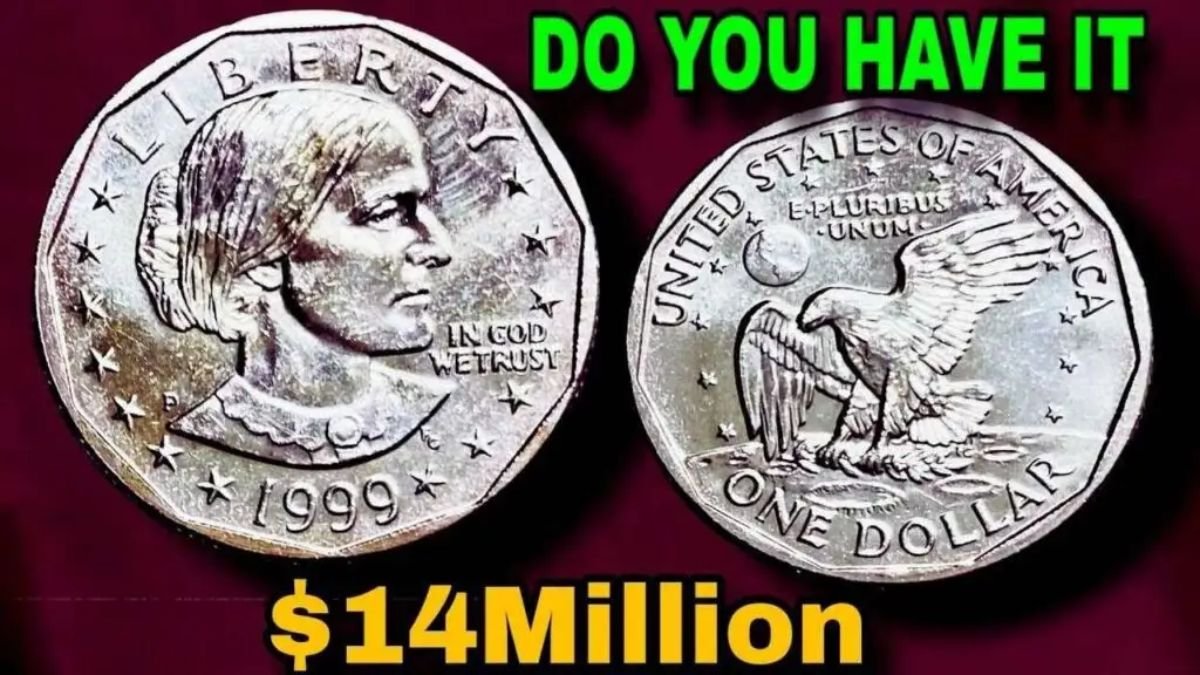
The 1999-P Susan B. Anthony Dollar is one of the final coins in the Susan B. Anthony dollar series and has attracted renewed interest from collectors because of its relatively limited production compared with some earlier issues.
Although the coin has a face value of just $1, certain high-grade examples can be worth considerably more to collectors. However, most circulated 1999-P Susan B. Anthony dollars are not rare enough to command large premiums.
So, if you have a 1999-P Susan B. Anthony Liberty One Dollar coin, what is it actually worth? The answer depends mainly on its condition, certification and any unusual characteristics.
What Is the 1999-P Susan B. Anthony Dollar?
The Susan B. Anthony dollar was introduced in 1979 and was produced through 1981 before production stopped. The series returned in 1999 for one final year before the Sacagawea dollar was introduced in 2000.
The 1999-P issue was struck at the Philadelphia Mint and carries no traditional mintmark other than its identification as a Philadelphia issue in numismatic references.
The coin features a portrait of Susan B. Anthony on the obverse, while the reverse depicts an astronaut-related Apollo 11 design with an eagle approaching the Moon.
Frank Gasparro designed both sides of the coin. The piece is made from copper-nickel clad over a copper core, weighs approximately 8.1 grams and measures 26.5 mm in diameter.
1999-P Susan B. Anthony Dollar Mintage
The Philadelphia Mint produced approximately 29,592,000 regular-strike 1999-P Susan B. Anthony dollars.
Denver produced another 11,776,000 circulation-strike examples in 1999. There were also special 1999-P proof coins produced for collectors.
The 1999 production is notable because Susan B. Anthony dollars had not been struck for regular circulation since 1981.
The return of the denomination was largely connected to the depletion of existing government stocks and renewed demand for dollar coins.
Why Is the 1999-P Dollar Interesting to Collectors?
The 1999-P Susan B. Anthony dollar isn’t necessarily rare simply because it is from 1999.
Millions were produced, meaning ordinary circulated examples are relatively easy to find.
What makes the coin interesting is its place in the history of the series. It was effectively the final circulation issue of the Susan B. Anthony dollar, making it an important date for collectors assembling a complete set.
Condition can also make a major difference.
1999-P Susan B. Anthony Dollar Value
The value of a 1999-P Susan B. Anthony dollar depends heavily on its condition.
For an ordinary circulated coin, the value may be close to its $1 face value. NGC’s current guide lists circulated examples around the face-value range, with values increasing as the grade rises.
Examples in high uncirculated grades can bring considerably more.
NGC’s guide currently lists the 1999-P at approximately:
| Grade | NGC Guide Value |
|---|---|
| Circulated grades | About $1.05 |
| MS60 | About $1.10 |
| MS63 | About $1.25 |
| MS65 | About $2 |
| MS67 | About $12 |
| MS68 | About $40 |
| MS69 | About $700 |
These figures are guide values rather than guaranteed selling prices. Actual prices can vary according to certification, eye appeal, demand and the marketplace.
Can a 1999-P Susan B. Anthony Dollar Be Worth Hundreds?
Yes, but generally only when the coin is in an exceptionally high grade.
This is an important distinction.
A normal 1999-P dollar found in circulation is not automatically worth hundreds or thousands of dollars. The high values associated with the date are generally connected to coins that have survived in exceptional condition and received very high professional grades.
For example, PCGS records auction information for professionally graded 1999-P examples. A 1999-P graded MS67 by NGC sold for $38.33 in a 2014 auction, while another MS66 example sold for $13.
PCGS also reports an auction record of $16,100 for a 1999-P regular-strike Susan B. Anthony dollar, although this is an exceptional historical result and should not be interpreted as the normal value of the coin.
Condition Is Extremely Important
The biggest factor affecting the value of a common 1999-P Susan B. Anthony dollar is its condition.
Collectors examine the coin for:
- Scratches
- Contact marks
- Surface damage
- Wear
- Luster
- Strike quality
- Original surfaces
- Overall eye appeal
A coin that has spent years circulating will normally show scratches, wear and other marks.
By contrast, a coin that was stored carefully and never entered regular circulation may qualify for a high Mint State grade.
What Does MS Mean?
You may see terms such as MS65, MS67 or MS68 when researching the 1999-P Susan B. Anthony dollar.
“MS” means Mint State, indicating that the coin is considered uncirculated.
The number following MS represents the grade on the standard 1-to-70 grading scale.
As the grade increases, coins become increasingly difficult to find in comparable condition.
That is why the difference between an MS65 and an MS68 coin can be substantial even though both coins are technically uncirculated.
Should You Get Your Coin Graded?
Professional grading isn’t necessary for every 1999-P Susan B. Anthony dollar.
If your coin is circulated and shows obvious wear, spending money on professional grading may not make financial sense.
However, grading may be worth considering if:
- The coin appears completely uncirculated.
- It has exceptional surfaces.
- There are very few marks.
- The strike is unusually sharp.
- You believe it could qualify for a very high Mint State grade.
- A dealer believes it could be valuable.
Professional certification can also provide authentication and an independent grade.
Look for Errors and Varieties
Collectors should also examine their 1999-P dollar for unusual characteristics.
Potentially interesting coins can include pieces with:
- Major striking errors
- Doubled features
- Off-center strikes
- Broadstrikes
- Clipped planchets
- Other recognized mint errors
However, not every unusual-looking mark is a mint error.
Damage occurring after the coin leaves the Mint can sometimes resemble an error. For that reason, suspected major errors should be authenticated before assigning a substantial value.
Don’t Clean Your Coin
If you’ve found a 1999-P Susan B. Anthony dollar and think it might be valuable, do not clean it.
Polishing, rubbing or chemically cleaning a coin can damage its original surface.
Professional collectors generally prefer coins that retain their original surfaces. Cleaning can therefore reduce the coin’s desirability and potentially its market value.
Keep the coin as you found it until you’ve determined what you have.
1999-P vs. 1999-D Susan B. Anthony Dollar
There were two regular circulation-strike versions of the Susan B. Anthony dollar in 1999:
- 1999-P — Philadelphia Mint
- 1999-D — Denver Mint
The Philadelphia Mint produced 29,592,000 regular-strike examples, while Denver produced 11,776,000.
Both are important because they represent the final regular-production year of the Susan B. Anthony dollar.
The 1999-P issue is generally more common than the 1999-D issue based on mintage.
What About the 1999-P Proof?
The 1999-P proof Susan B. Anthony dollar is a separate collectible issue.
PCGS reports a maximum production figure of approximately 750,000 1999-P proof dollars, making the 1999-P proof production the lowest mintage for the Susan B. Anthony series.
Proof coins were specially produced for collectors and have different characteristics from regular circulation strikes.
If your 1999 Susan B. Anthony dollar has a particularly sharp, mirror-like appearance, it may be worth checking whether it is a proof rather than an ordinary business strike.
How to Identify Your 1999 Susan B. Anthony Dollar
If you have one of these coins, start with a simple inspection.
Step 1: Check the Date
Make sure the coin is dated 1999.
Step 2: Identify the Mint
Determine whether it is the Philadelphia or Denver issue.
Step 3: Examine the Condition
Look closely for wear, scratches, marks and loss of original luster.
Step 4: Check for Unusual Features
Use a magnifying glass to inspect the lettering, date, devices and edge for possible mint errors.
Step 5: Compare With Reliable References
Compare your coin with professional references from organizations such as NGC and PCGS.
Step 6: Consider Professional Grading
If the coin appears exceptionally well preserved, professional certification may help determine whether it has significant collector value.
Is the 1999-P Susan B. Anthony Dollar Rare?
The best answer is not in ordinary condition.
Nearly 30 million regular-strike examples were produced at Philadelphia, so the coin is not considered rare simply because it is a 1999-P.
However, high-grade examples are a different story.
As coins become increasingly well preserved, the population available at the highest grades becomes smaller. This can create substantial differences in value between ordinary circulated examples and exceptional certified pieces.
Final Verdict
The 1999-P Susan B. Anthony Dollar is an interesting coin for collectors because it represents the final regular-production year of the Susan B. Anthony dollar series.
Most examples are worth around their $1 face value, particularly when circulated. However, coins preserved in exceptional Mint State condition can command significantly higher prices.
The key is not simply the date. When evaluating a 1999-P Susan B. Anthony dollar, pay attention to its condition, grade, surfaces, strike quality, proof status and possible mint errors.
So if you have a 1999-P Susan B. Anthony dollar, don’t assume it’s either worthless or a fortune. Examine it carefully, compare it with reliable coin references, and consider professional authentication if the coin appears to be an exceptional example.