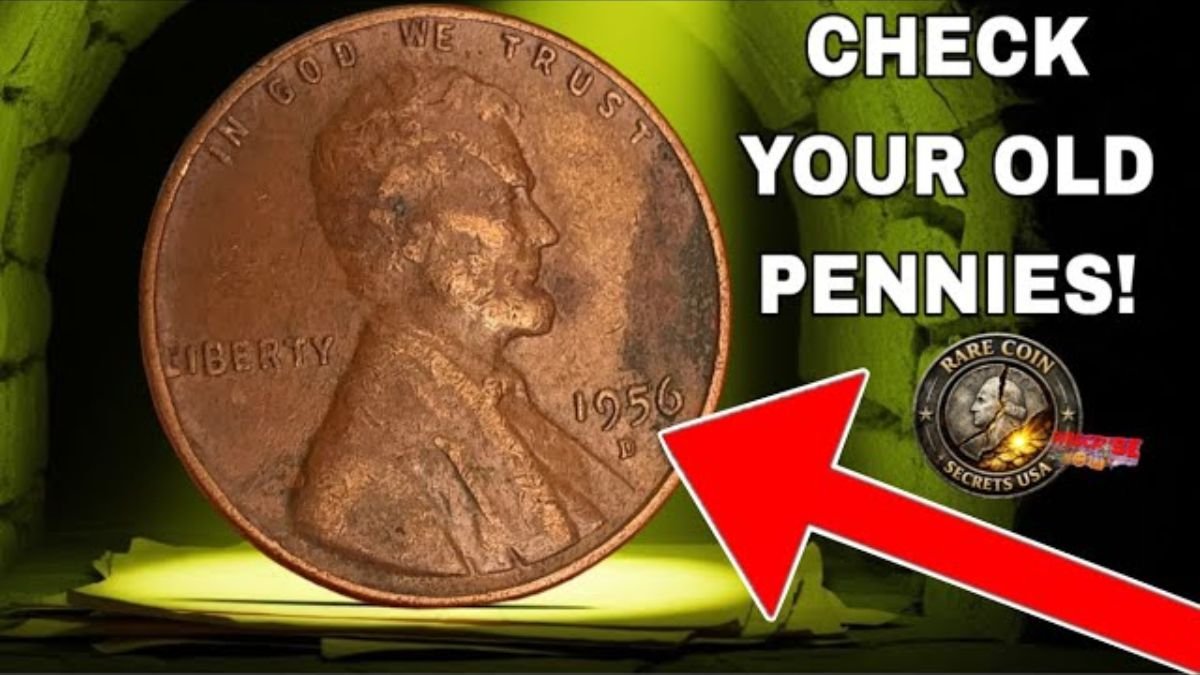
Wheat pennies are often tucked away in old coin jars, collections, and inherited boxes without much thought. But some Lincoln Wheat cents can be worth far more than their one-cent face value.
The series was produced from 1909 through 1958, and while most Wheat pennies are relatively inexpensive, a handful of rare dates, minting errors, and doubled-die varieties are highly sought after by collectors. NGC identifies several key dates and major varieties as important rarities in the series.
Before you spend or sell an old Wheat penny, check these five coins that can surprise collectors with their value.
1. 1909-S VDB Lincoln Cent
The 1909-S VDB is one of the most famous Wheat pennies ever produced.
Only 484,000 were struck at the San Francisco Mint, making it one of the lowest-mintage regular Lincoln cents. The coin also carries the initials VDB, representing designer Victor David Brenner, on the reverse.
Because of its low mintage and historical significance, the 1909-S VDB is considered a major key date. NGC notes that it is one of only two regular Lincoln cent issues with a mintage below one million.
Condition makes a huge difference. A heavily circulated example can still be valuable, while a sharply preserved specimen can command substantially more.
Check for: 1909 date, S mint mark, and VDB initials on the reverse.
2. 1914-D Lincoln Cent
The 1914-D is another legendary Wheat penny.
The Denver Mint produced only about 1.19 million examples, and relatively few survived in excellent condition. NGC identifies the 1914-D as one of the most coveted key dates in the Lincoln cent series.
The tiny D mint mark beneath the date is the detail collectors need to verify.
A worn 1914-D can already carry a significant premium, but high-grade examples can be dramatically more valuable. This is why collectors pay close attention to condition, surfaces, and authenticity.
3. 1922 No D Lincoln Cent
The 1922 No D is one of the most fascinating Lincoln cent varieties.
In 1922, the Philadelphia Mint did not produce Lincoln cents. Denver was the only mint striking cents that year. Because of die problems and subsequent die polishing, some Denver cents were produced with a missing or extremely weak D mint mark.
That created the famous “Plain” or No D variety.
However, not every 1922 cent with a weak or missing-looking mint mark is valuable. Altered coins and damaged examples can create similar appearances, so authentication is especially important.
4. 1943 Bronze Lincoln Cent
The 1943 Bronze cent is one of the most famous minting errors in American numismatics.
During World War II, the U.S. Mint switched from bronze planchets to zinc-coated steel planchets to conserve copper. A small number of bronze planchets were apparently left in the production process and accidentally struck with the 1943 date.
The result was an extraordinarily rare copper-colored 1943 cent.
Some genuine examples have sold for hundreds of thousands of dollars. One 1943-D Bronze cent eventually sold for $840,000 at auction, according to recent auction reporting.
If you find a 1943 cent that looks copper rather than steel, don’t assume you’ve struck it rich. Counterfeits and altered coins are a serious concern.
5. 1955 Doubled Die Obverse
The 1955 Doubled Die Obverse is one of the easiest major Lincoln cent varieties to recognize.
The doubling is particularly dramatic on the date and lettering, including LIBERTY and IN GOD WE TRUST. NGC describes the 1955 doubled die as one of the most dramatic and valuable doubled-die errors in the Lincoln series.
The key is genuine die doubling—not scratches, damage, or ordinary machine doubling.
A confirmed 1955 Doubled Die can be worth substantially more than a normal 1955 Wheat penny, with value depending heavily on condition.
How Much Are Wheat Pennies Worth?
There is no single value for a rare Wheat penny. Prices depend on date, mint mark, variety, condition, color, authenticity, and collector demand.
Most Wheat pennies are not rare. The five coins above stand out because they combine scarcity, important varieties, or famous minting errors.
If you believe you have a valuable example, professional authentication and grading can help establish its identity and condition.
Don’t Clean Your Wheat Penny
If you discover an old Wheat penny that looks valuable, don’t clean or polish it.
Cleaning can permanently damage the original surface and reduce collector appeal. Handle the coin carefully by its edges and store it safely until it can be examined.
Frequently Asked Questions
What is the most valuable Wheat penny?
The 1943 Bronze cent is among the most valuable Lincoln Wheat cents. Extremely rare examples have sold for hundreds of thousands of dollars.
Which Wheat pennies should I check first?
Start with the 1909-S VDB, 1914-D, 1922 No D, 1943 Bronze, and 1955 Doubled Die.
Are all old Wheat pennies valuable?
No. Many common Wheat cents are worth only a small premium over face value. Rarity, condition, and variety determine whether a coin has significant collector value.